.png)
This AEP, a large part of your book will be in flux. Between plan exits and service-area cuts, more than 3.5 million beneficiaries will be affected by plan disruption — and all of them will be shopping for new plans.
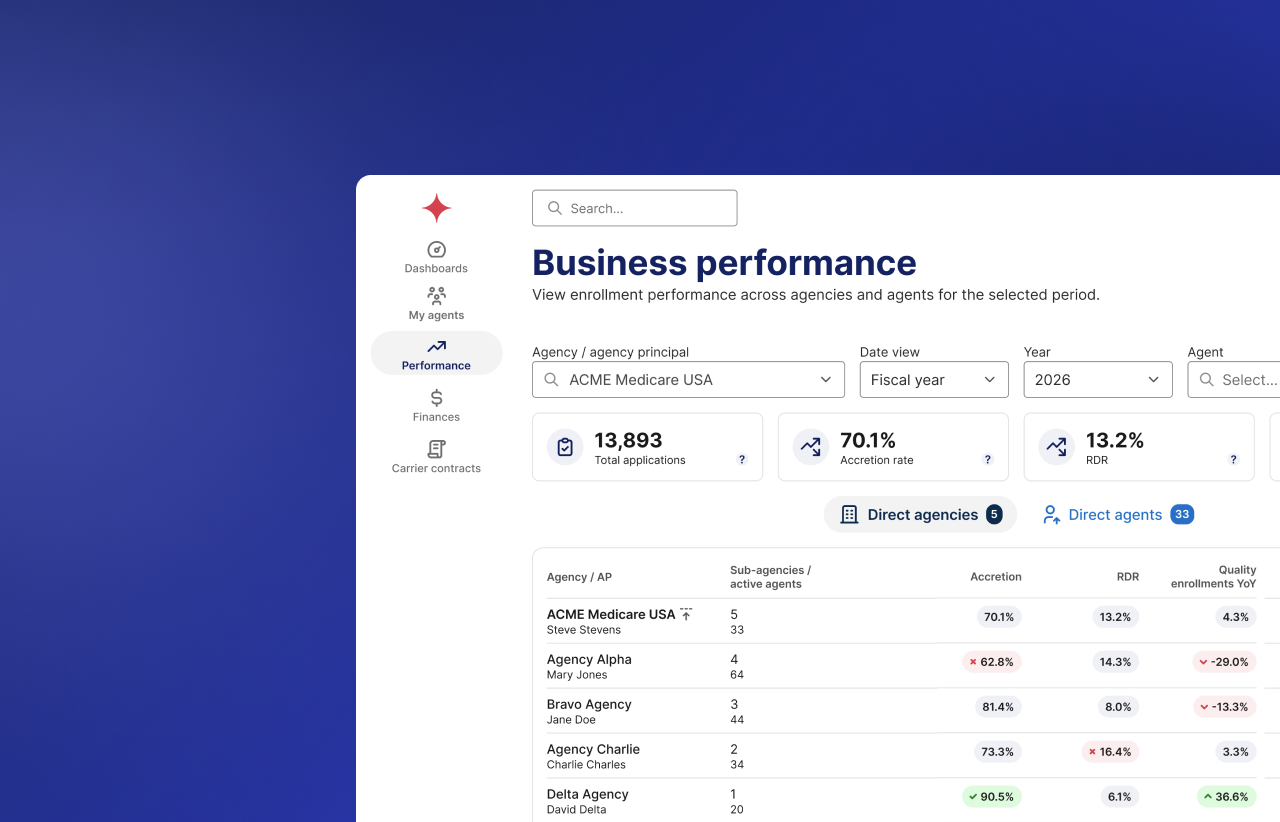
Carriers are raising the quality bar at the same time, and tying it to your compensation. Volume alone isn't enough anymore. Humana and UnitedHealth have both set formal thresholds on accretion and complaints, UnitedHealth has added one for rapid disenrollment, and falling below them can cost you commission or a contract.
Enrollment quality is decided at the quote
Those metrics look like back-office reporting, but they're really a verdict on the quote. Accretion, rapid disenrollment, and CTMs all measure the same thing after the fact: whether the plan you wrote actually fit the client’s needs, and whether the client understood why they were on it. This AEP you'll be making that call more often, across more markets, and in counties where the plan landscape just changed — which is exactly when it gets harder to get right.
So today we're launching Plan Fit, Spark’s new quoting experience, to all Spark agents. Plan Fit analyzes the Medicare Advantage plans available in a given market, applies the filters that matter, and narrows the field to a short list of category leaders — so you start the conversation with a shortlist of confident, well-reasoned picks.
Turn it on in Settings → Beta features → Plan Fit.
Overload produces default decisions that can lead to poor fit
Take one client: 10 prescriptions, two specialists, one hospital network they won't leave, and a fixed budget. Now weigh that against premium, drug costs, formulary tier, giveback, MOOP, copays, star rating, network breadth, preferred pharmacy, extras, prior authorization, zip availability, and RTS status — across 40-plus plans in the market on average. On a call, you're doing that math while the client is on the line. In the field, you're doing it across a table, sometimes in a county you expanded into last month.
Nobody gets that wrong out of carelessness. It's a working-memory problem, and working memory has a ceiling. When you hit it, three things happen:
- The most visible number isn't always the most important one. A $0 premium leads over drug costs and MOOP, so real risk exposure goes underweighted.
- You default. It's easy to anchor on the attributes clients ask about first — the giveback, grocery card, or $0 premium — because those are the easiest to explain and the fastest to compare. The attributes that decide whether the plan holds up over a year, like drug costs and the out-of-pocket maximum, take longer to work out.
- Nothing records the "why." Clients don't always understand the tradeoff, so the enrollment is fragile. They second-guess the decision when the first EOB arrives, or the next agent who calls offers a bigger giveback and nothing in their head argues back, and a clean application turns into a rapid disenrollment three months later.
Plan Fit solves cognitive overload — here’s how
Plan Fit starts with the core MAPD plans you're RTS for that are available in the beneficiary's market. From there, it narrows the field to a defensible shortlist, with each plan labeled on where it wins. In most markets, these are the three you see:
- Cost-focused: the lowest estimated yearly cost for what the client needs today. Keeps routine expenses down, but may cost more if something unexpected happens.
- Protection-focused: a lower out-of-pocket maximum, so the worst-case year is more predictable.
- Balanced: the middle ground across monthly cost, copays, and added benefits.
To arrive at this shortlist, quality filters first drop anything that can't qualify — zip availability, a four-star or higher rating, and the client's required doctors in-network. In thin markets the star floor auto-softens to keep those doctors in network.
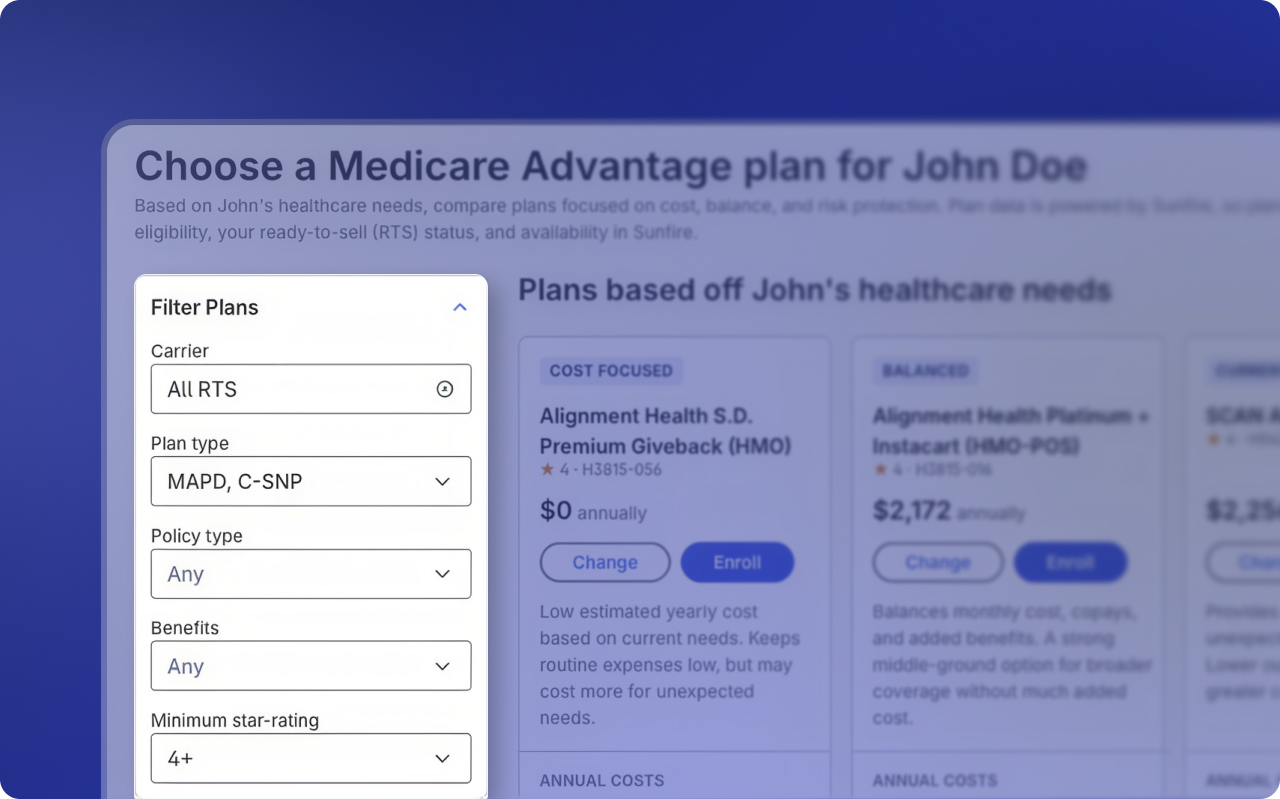
Spark then conducts a cost and risk analysis, scoring what's left on two axes. Expected annual cost is premium plus drugs, minus giveback, plus copays, built from plan filings, the client's actual drug list priced through the SunFire drug-quoting APIs, their specialist visit count, and an assumed three PCP visits a year. Risk is the in-network MOOP, taken as filed.
.png)
The resulting shortlist keeps the standouts — three to eight plans, each labeled where it wins. The label is the short answer to "why this one," providing a consistent and defensible framework to compare plans with your clients.
.png)
What changes in your day
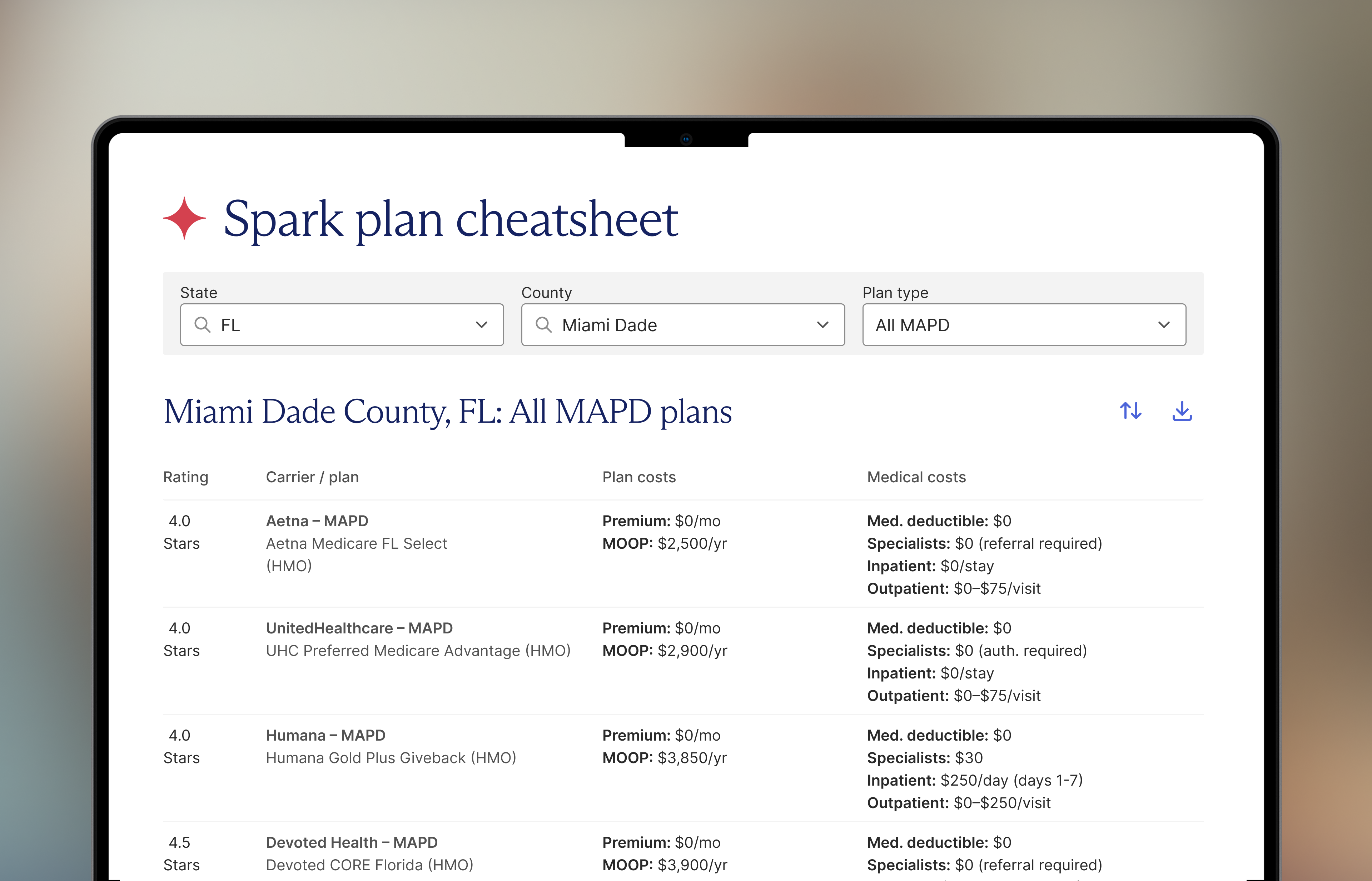
With Plan Fit, you spend less time comparing and more time listening to what your clients need. The same math runs on every case, so your rationale holds up for every beneficiary. You still enroll in SunFire — pick a plan and Plan Fit deep-links you into the application. The full plan universe stays one click away, so nothing is suppressed. And the recommendation is still yours: Plan Fit explains the options, you decide what to write.
Plan Fit helps you write more quality enrollments this AEP
Accretion, complaints, and rapid disenrollment all trace back to whether the plan actually fit the client on the day you wrote it. Spark’s enrollment dashboards show you where quality broke. Plan Fit is how you get it right in the first place.
It's the newest piece of a platform we're building so the hard parts of this business — quoting, enrolling, getting paid, and staying compliant — take less of your day and hold up better under scrutiny.
Already selling with Spark? Turn on Plan Fit in Settings → Beta features → Plan Fit, and be sure to watch the Plan Fit launch webinar replay or check out this Help Center article for a full walkthrough.





%201.png)







.png)





.png)












.png)
.png)
.png)




.png)



.png)
.png)
.png)
.png)


.png)
.png)
.png)
.png)
.png)



.jpeg)


